Tuesday, September 12, 2017

Chaga Harvest

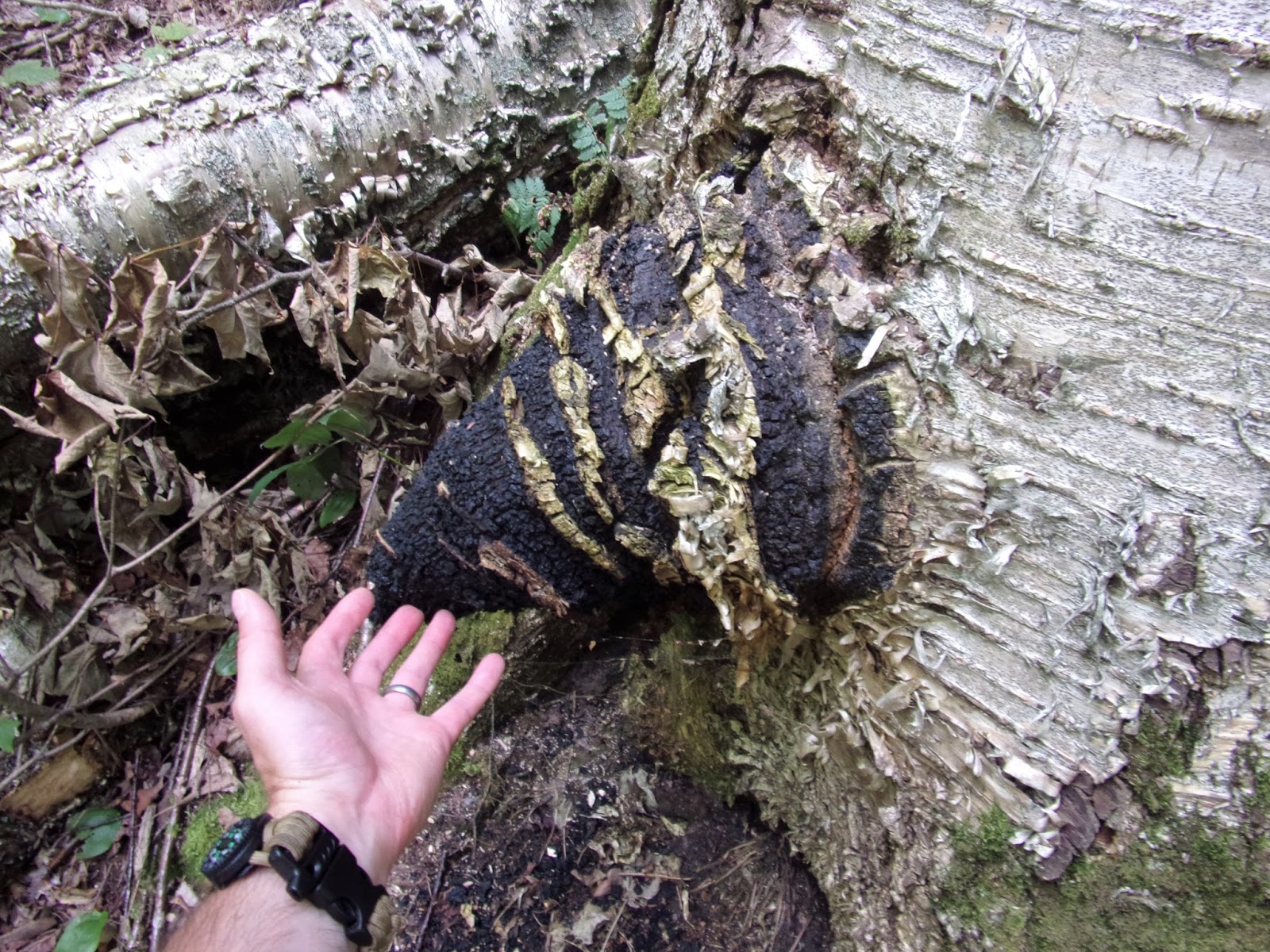
I got around to harvesting the massive conk of chaga I discovered on a hike last month. I grabbed my pack and headed out into the woods.

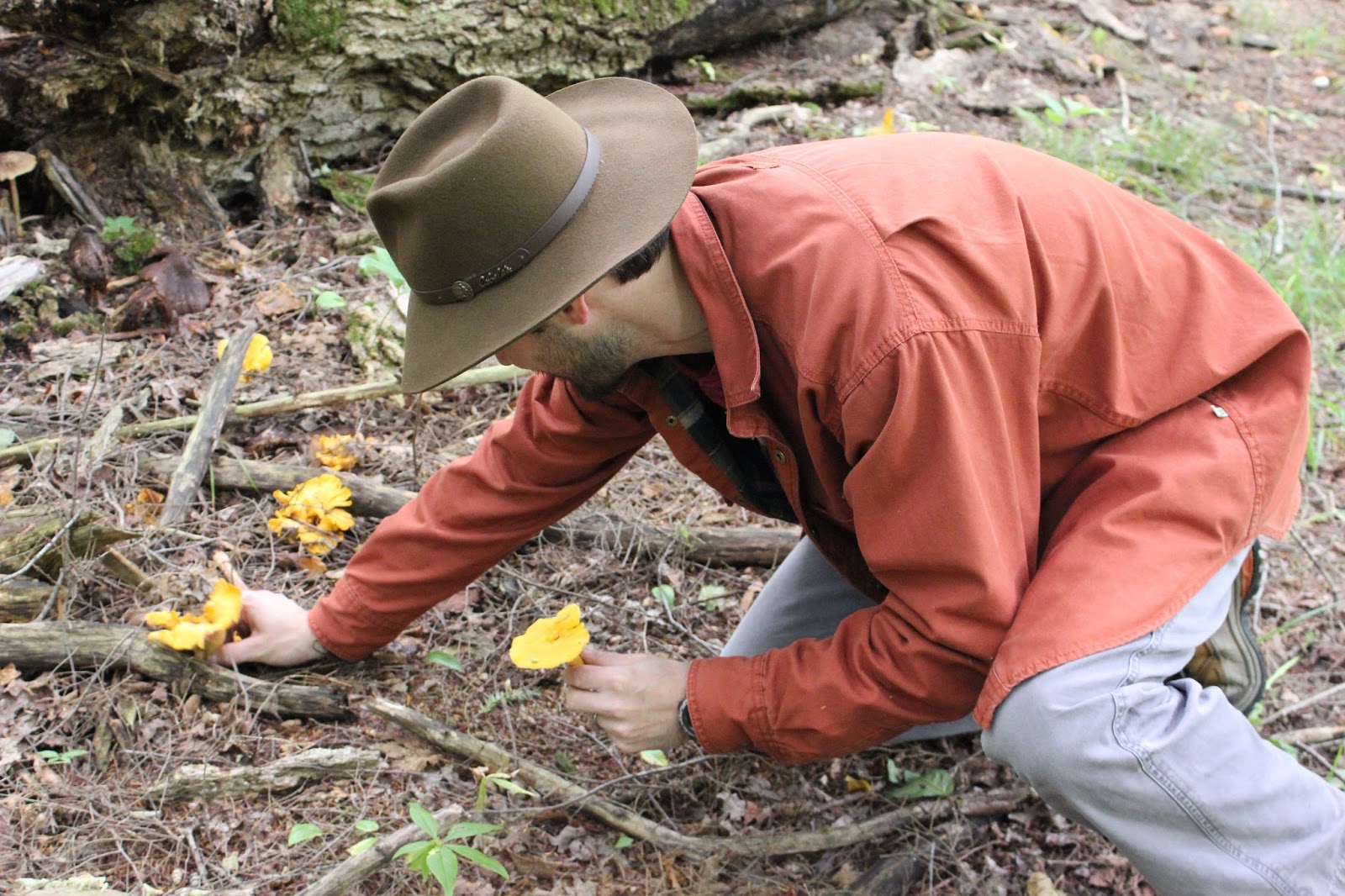
As I cruised through the forest I scanned for mushrooms along the way. My hopes sprang up when I spotted some orange ones and thought for sure they would some more chanterelles to add to the larder, but my hopes were dashed once I got closer and I seen they were just one of it's impostor counter parts.

The false chanterelle

 
A slice from my knife reveals it's hollow stem.
The under side shows defined gills that start at the stem.

 
This is a real chanterelle for comparison.

 I hiked the mile and half back to where I discovered the giant yellow birch and two deft blows from some Swedish steel relinquished the ancient tree's bane into my possession.


The object of the Birch's inevitable demise was now my prize.


  I loaded the hefty horn of fungus into my day pack, took a few gulps of water and began my hike back out. This chunk of chaga will last me awhile. I estimate it weighed about 15 pounds.

My buddy, the Megeleates Sequoiarum beetle was back.


The walk revealed a few other interesting fungi, including some hard to find but prized, black trumpet mushrooms! And I found deadliest mushroom on this planet, the infamous destroying angel.

A gourmet quality fungi, the black trumpet.

Coral fungus
Common Earthball. It's poisonous.
The deadliest known mushroom on earth. The Destroying Angel.

    Thanks for looking!                              

Thursday, September 7, 2017

Brookie fishing along a snakey river.

   I was able to get some free time during the Labor day holiday and headed out to do a little stream fishing. It was a mild day with temperatures in the 60's and I headed out to an area where I knew I might be able to tie into some trout for a meal along with the possibility of gathering some edible mushrooms. It was a one of those perfect fall afternoons, albeit a little breezy. I wasn't going to fish too long and had a few holes in mind that I wanted to try.

  As I headed through the woods towards the stream I was surprised that the water level was so low. It had been raining almost every other day for days so I expected river conditions to be little high and the water to be somewhat turbid. However, it was low and clear.

  Rounding a bend along the wood line, I spotted a flock of female common mergansers that had congregated on some rocks in the river. These are fish eating ducks and they are never a good sign when you see them hanging out on a stretch of water you intend to fish. In the fall they flock up in decent numbers and are one of the hindrances to successful autumn fishing outings on rivers and streams. I was hidden in the trees and they had not detected my presence so I was able to snap a few photos of them before I intentionally spooked them away.


   Not far from where flock took off  was a small stretch of deeper water with a few riffles that looked like it could hold a fish. I tossed a small spinner in to where I figured it would cross paths with a hungry brookie and with in a few turns of the reel I fell the sudden "rap" of a fish hitting. I set the hook and the fight was on. First cast and a fish. It seemed like it might be a great day in the making. The trout made a valiant fight and as I was reeling it in, I realized I had forgotten my landing net at home! I backed up and as the fish neared shore I slung it up into a grassy area behind me. Thankfully it was a smaller fish because there are times you just can't do that with a bruiser and expect to have a successful and happy ending. 


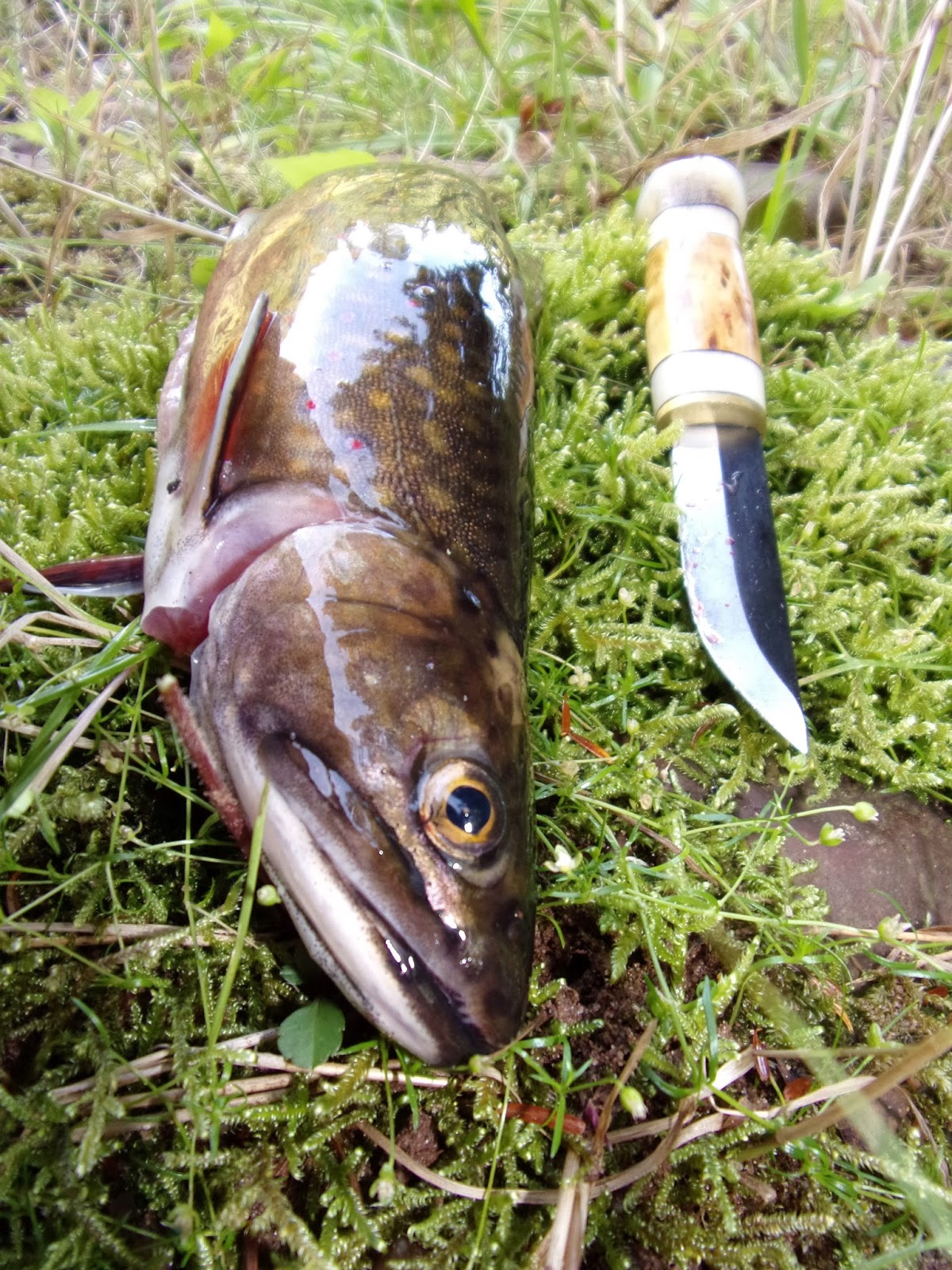
   The brook trout was nicely colored and was starting to exhibit it's fall spawning colors. I happily added it to my creel and then I tried for another one in the same riffle but a little further down stream from where this fish hit. Almost as soon as the spinner hit the water a second trout hammered the lure. Two fish in two casts! It very well may end up being a good day indeed! I couldn't have asked for a better start for to this short term fishing trip.


  This one was a little smaller than the first brookie so I let it go. It had some beautiful and vivid markings. I'm always fascinated by their looks. Each fish's pattern and coloration, much like a fingerprint, is unique.

  I pushed my luck and tried a few more casts in that riffle but wasn't able to evoke any more strikes so I moved on to the next spot I had in mind.

  The next hole looked like it was deep enough to hold a few fish and I was hoping they were going to be just as accommodating to me as their down stream brethren were. My first cast produced a strike but no hook up. The same thing happened with the next few casts. I re-positioned and waited a bit before casting again. The slight change in the retrieve angle seemed to have had a positive effect because another solid hit led to a hook up for fish number three of the day.


   I let this one go too, and returned to assaulting the hole in hopes of something larger. A few retrieves later I had a decent one follow up but it wasn't interested. Changing the lures a few times didn't change that fish's mind in the least so I moved on to my next destination along the river.


   As I reached the hole that was to be my primary destination I was dismayed to find a large flock of about 20 mergansers hanging out all along it. I'm guessing the group I spooked off met up with another flock and they decided this hole was the place to be. The ducks scattered all over the place at the sight of me and went swimming through every eddy and riffle that held the prospect of a fish. I tried my best but the results were what I expected. Nothing. I moved on and fished a small rocky area above stream but that it yielded was a few follow up from very small fish. I expected as much considering how shallow the water was there, but it was still neat to the see the small trout dart out  like ghosts from parts unknown to investigate the lure.

Bank erosion from high, spring melt waters.
Trout love to hide in the root tangles in early spring


    At this point I shifted away from fishing and began my hike out, I was hoping to come across some mushrooms that may be out after the frequent rainfalls we had recently experienced.


   On this outing I carried my miniature puukko knife. It's a handy little Finnish made knife that just begs to be used on birds and trout. It's basically a scalpel that's handled in curly birch and reindeer antler. It's a fantastic little blade. Because I knew I'd be using this one around water a lot I applied 5 coats of Birchwood Casey Tru-Oil to the handle. This gun stock finish makes the birch impervious to water. I also polished a lot of paste wax into the antler portions.


   As I walked through the woods I kept scanning for mushrooms when I suddenly spotted a snake. It was a garter snake and large one at that. In fact, it was one of the largest ones I have ever seen and it was stretched out to at least 3 feet in length. I was close enough to it that I thought it was odd that it wasn't moving. Usually these snakes, like most snakes, are quite skittish and vacate as soon as they sense your presence. This thing looked like it was dead. I noticed a large bulge in it's midsection and figured it ended up dying from one of the 7 deadly sins, gluttony. Were it's eyes bigger than it's stomach? I thought for sure it had devoured some critter that was just too big for it's digestive tract to handle and a bad case of indigestion did the snake in.


I walked around to the front of the snake to a close up photo and it still didn't move. Then suddenly it snapped out of it's presumed slumber and started going berserk! The only thing I can figure is the snake was literally in a food coma and was just trying to zone out while it digested it's meal. I then realized that the damn thing couldn't move due to the fact the bulge in it's mid section made it impossible for it to slither away. The snake just stood it's ground and aggressively struck out to ward off any threats. I had never seen this behavior in a garter snake before. Normally they are quite docile.


I shot some video footage of the serpent striking out at my camera lens. 


  Thankfully I never have to worry about encountering any venomous snakes where I live. We only have a few species of snake that reside up here and they are all small and not dangerous. I know what it's like to be paranoid in snake country, and it's not fun. I lived in Australia for a while and averaged one deadly snake encounter per every month I was there. One king brown snake even slithered into a shower stall while I was taking a shower in it! That's one thing that I don't miss about living in Oz. That's a story for another day though.

  After I was done harassing the snake I wandered off to go back in search of mushrooms. I found a couple of interesting specimens.


Possible young beefsteak fungus?


  I also came across this strange growing tree. I have heard stories and photos of trees that looked like this. Long ago, The Indians would purposely manipulate a tree's growth to look like this and it then acted as a long term trail marker or directional sign. This crooked growth seems too high to be such a marker from the past, but you never know.


  Still not having any luck finding the mushrooms I was looking for, I decided to clean my catch down by the river. I always like to check the stomach contents of the fish I catch just so I know what they were feeding on, This one's belly was as empty as my mushroom bag. No wonder it hammered that lure as soon as it hit the water.


I washed my hands in the river, packed up my fishing gear that was scattered about and continued my walk back through the forest. It was then that I finally stumbled upon the gold I was seeking...


Chanterelles! 

  I finally found what I was hoping to come across. It's a choice mushroom and it will be great to add with a meal of a fresh caught trout. There was small number of them in perfect condition. I got busy harvesting my bounty. 


  All in all it was a great early fall day to be out in nature. I caught some fish, found some wild edibles and just enjoyed some great scenery, wildlife and fresh air. Little jaunts like this help to refresh my soul and make me appreciate the world that I live in. I'm also thankful for the great opportunities I have to spend time in a land that can afford me such experiences.


Thanks for taking the time to look!

Friday, September 1, 2017

The most wonderful time of the year

   Autumn, the greatest season of all if you are a sportsman. I love this time of year. It's filled with the anticipation of future hunts, fantastic fishing and great times that are to be had soaking up the colorful splendor and activity of  a woodland realm getting ready for it's slumber.

   As the greens fade and start to yellow, the maples put on their crimson coats. Brook trout transform into their most magnificent form wearing their Sunday best as they ready for the big dance. Mighty salmon run up tiny creeks than may be only knee deep, while chevrons of Canadian geese grace the sky. The air turns cool and sweet with the smell of fresh fallen leaves while the blazed colors of the woods make me feel dizzy as wander through them, making it hard to visually focus on anything. Grouse flush and stop the heart while fresh rubs betray the presence of a buck in the area. Moose tracks in the mud make me wonder where the great forest king is now, as a plethora of fungi suddenly explode from the forest floor around them. And near the end, the tamarack weeps and it's needles drift like snow in the air as a harbinger to all of what is coming... These are some of my favorite things.


Saturday, August 26, 2017

Kayak Bushwhack Camping Trip

   Every year, for the past few years I go on a primitive camping trip with a good childhood friend J.D.who recently returned to back to the area after a long stint in the military. We re-connected and found we shared a lot of similar interests when it comes to our outdoors pursuits. He is the only close friend of mine that will partake in what we termed as our "survival" trips. These trips always include bushwhacking for a camp site, and two primary objectives. The first objective is we try to secure as much foraged or caught food as we can and the second one is to test our woodsman-ship and bushcraft skills. Naturally, we also end up field testing any new gear we may have bought since the last season.

   Over the course of the winter months we usually try and brain storm ideas of where we will camp during the upcoming summer season. Some trips are solely ground based hikes from one destination to camp at to another, and some are water based where we take our kayaks and camp and paddle. This year was an amphibious kayak camp. Our destination was to be Moosehead Lake located in the Ottawa National Forest in Michigan's Upper Peninsula. This particular lake is located on the border with northern Wisconsin and actually has a channel that connects to sister lake on the Wisconsin side. I have camped at the Forest Service campgrounds before on the Michigan side and have fished the lake numerous times in early and late spring over the years. This time camping would be different and we would go blindly in to find a suitable spot along the shore line and bushwhack into the forest. Many lakes in the Upper Peninsula present challenges for this type of camping because they can be surrounded by large swaths of bog, thick swamps or a combination of both for some distance before you reach any practical area to set up a camp. This lake was edged by about 70% swampy lowlands and the other 30% was fast elevating hill side.

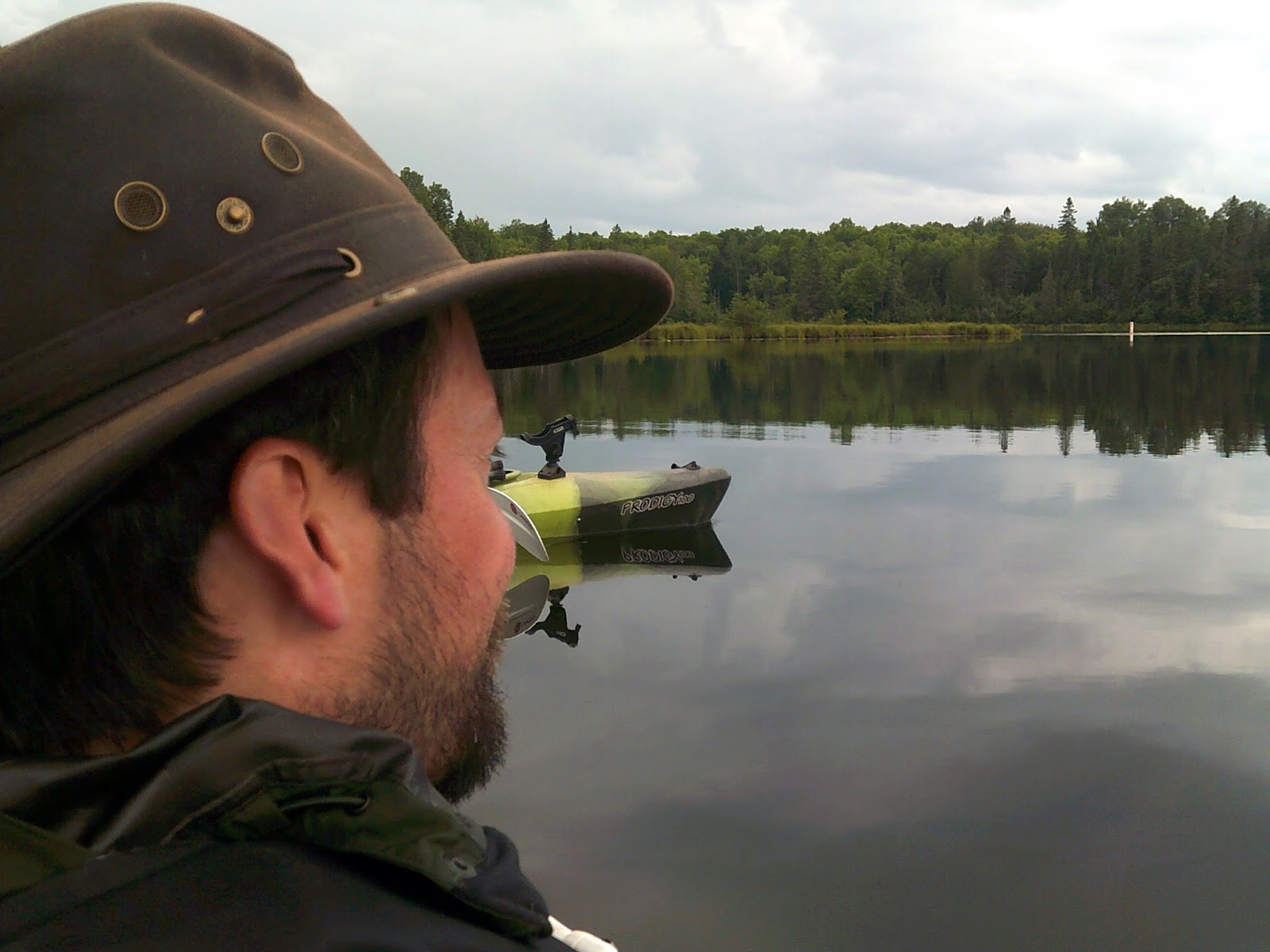
Upon arriving at our destination we decided to paddle around the lake to scout a suitable landing spot that might offer access to an adequate camp site. With the kayaks unloaded from the rig and packed up with gear, we pushed off to start the journey.


Of course, soon after we hit the water it started to rain. It was raining off and on all day. We knew it was going to be a soaker going in to the trip, but the forecast actually improved for us. After the short perimeter recon we settled on this pine knob as possible camp site. It was a stand of red pine that towered about 100 feet above the lake and it should offer good drainage as it normally grows in loamy soil.


As we got closer we discovered a beaver lodge and some beaver slides. The slides would afford us access points to land the kayaks.

That "hole" in the shoreline was our landing port.


The beaver's lodge was small and the creature was starting to amass it's winter cache of branches. They cut limbs and pile them around the lodge for future use. As they lake freezes over and winter sets in the beaver just makes short forays out of the lodge to feed on the bark of all the stashed sticks from under the ice. Judging by the amount of branches I hope this beaver gathers a lot more or it will not make it through the winter. I'm guessing it was a young one that may have recently struck out and established it's own territory.

  We landed on the shore and surveyed the area. The woods rose up from the shore line almost instantly and we hiked up the hill to see what the pine knob had to offer. After a short look around we decided on a decent spot atop the pine grove and started making camp. A down pour ensued. Setting camp up in a torrent is always fun. It seems every time J.D. and I go on these trips, we get hit by some kind of nasty weather phenomenon. Last year we were hit by a massive, fast moving daytime storm that took us by surprise with it's ferocity. It produced 60 MPH winds, hail, sideways rain and enough lightning activity to give Zeus an inferiority complex.  All in all it was an exciting storm to be caught in when all you had was a tarp for shelter. We loved every minute of it.

  This time it was just your run of the mill straight downpour soaker that hardly produced a grumble up in the sky. Earlier this summer, J.D.  and I did a camping/fishing trip on a local flowage and we got caught in downpour just as I finished cooking a shore lunch fish fry fit for king. We had to retreat to the cover of our hammock tarps and gulp down what ended up being very soggy fillets, water logged spuds and baked beans that could float off your plate. It was then that we had an epiphany and decided that having a secondary tarp shelter for eating or taking refuge in would't be a bad idea, so J.D. set up a stand alone tarp for us and our gear for this year's trip.


  The rain ensued and eventually we got camp situated. I spent more time than I'd have liked messing with a new bug net system for my hammock set up and trying to get everything else rigged and suspended off the ground with out it getting soaked.

It was a good looking camp.


After home was made, fire was the next item on the agenda. We both relish making fire under adverse conditions and one of the objectives of these trips is to make things difficult to test skills, mental attitude and gear. So being able to make fire in less than ideal circumstances is always a bonus. The rain had stopped and it started to lighten up as we began to scour around for burning material. Every thing was saturated so larger pieces of dead standing timber would need to be taken down and processed to the core in hopes of providing some dry wood and tinder. I found a dead standing pine that was home to a carpenter ant nest and my hatchet made short work of it. Inside was just what I was hoping for. Some thin, dry innards courtesy of the ants handy work.


  J.D. bucked up some maple and had hauled back to camp. I started splitting it up to different sizes.


We made a fire lay to keep the tinder source off the wet earth and I took out some yellow birch bark from my tinder pouch that always lives in my pack. The bark makes an excellent tinder nest for any method of fire starting and doesn't need much processing, if any, to catch a spark or coal. White birch on the other hand may need some processing if one is to use a coal, ember, spark or other primitive method of ignition. The next sequence shows J.D. trying his hand at making fire via real flint and steel with a kit I gifted him a while back. This can be quite difficult to do with such high humidity levels as there were that evening.


Where there is smoke...

...There is fire!
As we settled in around the fire we heard a snapping sound that we couldn't immediately identify, nor pinpoint where it was coming from. The sound intensified and at first we thought it was an animal of some sorts running into the camp. At full alert we started looking looking around when more cracking noises began and it was then I noticed a large branch careening it's way right at us from above! I yelled "Watch out!" and J.D. lunged out of the way as the branch smashed into the ground right next to where he was sitting. The branch wouldn't have killed a man but it was big enough to give you lump on the 'ole cranium. We had made a prior look out for widow makers before setting up camp but this dead branch was hidden from view or just didn't look like it was dead and we never noticed it. The rain must have saturated it with enough water weight that finally caused it to break off and fall. You never know what might happen when out in the bush.

  With the fire started and sustained, and with no more trees dropping limbs on us, we dried out some of our gear before relaxing around the fire and telling tales.

Missing his life in the Army and it's culinary delights, the Sargent felt it was necessary to cook his GI socks for dinner.


   That night it rained a few times and it got down to the mid 40's. August is a transition month up here in the north woods. The start of the month usually involves a heat wave in the high 80's with the later part ending up cool with temperatures in the day time that can be in the 60's. It can literally be 80 degrees in the day and in the low 40's at night. I fell asleep to the wind whispering through the long red pine needles. It's a sound I've always loved to hear. I grew up listening to the wind fueled song of the red pines that lined the back of my parent's yard and will always think of home when I hear it. Other than a mouse walking on my ground tarp, the night life was quiet.

   The morning brought with it a change of weather along with the giddy anticipation of what the day may bring. We both stayed dry and we each commented on how good of a sleep we got. It was one of the best sleeps I have had in the woods.


We brewed some coffee and packed a small bag of goodies to sustain us through out the day on the water. We usually bring some kind of minimalistic food sources to augment what we can catch or gather on these trips. This year J.D. made some jerky by using an ingenious home made means to speed dry it via the use of a common house fan and two furnace air filters. He sandwiched the cured meat strips between the two filters and the attached those to the outside of the fan. The fan is left to run as it force blows air across the meat, and viola! you get some great air dried jerky. My contribution wasn't as appealing. I decided to whip up a batch of hardtack using a Civil War era recipe. And by recipe I mean mixing a shot of water with some flour and pinch of salt. When creating it, it smells like Play-doh and when baking it, it smells like Pop-Tart crust. The flavor is somewhere between the two slightly more skewed towards the Play-doh side.

 Once on the water it didn't take long for the first fish to be landed. J.D. caught and released a chunky, but sub-legal bass. The day was looking promising already.


   I decided to focus on panfish to add to the day's caloric intake. I have done well at this lake in the past but have fished it only in the late spring; this was late summer. The fish were not active at all along the shore line in the morning. It was disappointing and I only had caught a few small bluegills and pumpkin seeds that I had let go. I was starting to reevaluate my catch a release policy. After assaulting half of the shore line with only a few fish on the stringer I managed to break my "Go to" panfish rod when I snagged up on a large lily pad. I tried to pull the snag out, and I didn't pull that hard but the pole couldn't take the strain. After 20 some years of pulling a thousand some fish from the water it gave up the ghost. I was disappointed in the loss of that old friend but at least it gives me an excuse to buy another fishing pole. The gleam that there was at the start of this day was quickly become tarnished.

Oh snap!

   I met back up with J.D., and we deiced to head through the channel to the Wisconsin side lake. We both had fishing licenses for each state so we could double dip, so to speak. The day before I noticed some wapato (Sagittaria latifolia) growing in different places along the shore when we were scouting for a landing site. The channel we crossing was chalked full of them. This plant produces an edible tuber in the fall that grows off of it's rhizomes. We decided to to see if we could collect a few to add to the nights meal. 


The only way to harvest what you want from this plant is to feel around near the base of the root system and feel out what you are looking for. Inevitably while doing this, visions on snapping turtles removing digits from your hands play in your head. We removed a few root masses to see what happening on the rhizomes.


   We cleaned and collected a few but it looked we were too early and the bulbs we were seeking weren't formed yet. We decided to take a few back to experiment just to see if they were edible in this early stage.

   As we passed through the channel J.D. hooked into a fish and at first I thought it was a large bass but it turned out he hooked a musky. After a short fight he landed it, but sadly it was on the "no eat" list.


   The fishing remained slow and soon there were only a couple of hands of daylight left as we paddled back to camp.


   Upon returning to the camp, J.D. went up the hill to prep fire wood and I started to clean the meager catch of the day along the shore. The haul was a mix of panfish that included some small bluegill, yellow perch and some pumpkin seeds, aka sunfish.


While cleaning the fish I noticed a strange noise off to my left and paused. It sounded like a small animal and it was making faint sounds that I can't really explain. It soon revealed it's self to just be the neighbor who was stopping by to see what was going on. The lodge was only about 12 yards to my left side.


   Back up at camp we started to process the wapato and roast it on the coals in some foil. In the mean time it was decided that a bush version of kalamojakka should be made from the fish.  Kalamojakka is Finnish-American dish that's is basically a fish stew. Some rice was added and diced jerky was tossed in for stock. I plopped in a hardtack biscuit to soften up while the pot simmered.  If you have any dental issues what so ever, steer clear of chomping on hardtack. This slab that was added barely soften after 20 minutes of boiling. It was forcefully cleaved up and allowed to simmer further. At that point, the hard chunks started to transform into delightfully chewy dumplings. 


Stew ready to simmer with hardtack block in place.


wapato


The wapato was a disappointment and as noted by J.D., it was astringent. It was just too early and the wholesome bulbs had not formed off the rhizomes to make it a palatable meal. The kalamojakka on the other hand turned out great. There was plenty to go around and we ate our fill.


Dinner is served.

After dinner the temperature dropped again causing the mosquitoes to retreat into the night. I could see my breath in the air when I was away from the warmth of the blaze. The night was dead still and as the fire slowly turned to embers, only a barred owl and some resident loons broke the silence that was enveloping us. That night sleep was again fantastic and even the loons didn't seem to dare to laugh anymore in fear of breaking the stillness of the air. It was pure, wild tranquility.


Morning arrived after another refreshing sleep. Coffee was made, water was filtered and gear was wrangled. We headed out to see what the day would bring.


This day we were going to focus on the Wisconsin side which is the Little Presque Isle Lake. We made a quick pass around Moosehead first and I started to pick up a some panfish that were a little larger than what was caught the prior day. There was a small but deep bay that looked promising and I soon hooked into a bluegill along edge of it. As soon as the fish started fighting I seen a torpedo shoot out of the depths and impact it. A musky had zoomed in from parts unknown to claim my fish! My reel screamed as the thief made it's run and I was amazed at the event currently taking place. Though the musky wasn't huge, the fish was large enough to spin my kayak around as it made it's bid for deeper water. I fought it for a short while before it relinquished the panfish, that by now was having by far the worst day of it's life. Hooked through the head and chomped on the body; I let the small, wounded bluegill go. I figured if it lived, it would at least have a helluva story to tell it's friends.


  I was able to add a few eating sized fish to the stringer as the day went on and as I was slowly edging through swath of lily pads I noticed something floating in the water amongst them. At first I thought it might be some lost piece of tackle from another fisherman that had floated there so I paddled over to check it out. To my disappointment it was an empty beverage can of some sort, then to my surprise I realized it was a 30 year old can of PBR! The top of the can was stamped '87. For three decades that can must have laid at the bottom of that lake and then filled up with organic material which started to decompose and that caused a gas bubble to form that lifted it back to the surface where it must have drifted into the lily pads. I was amazed that it hadn't rusted away to nothing because only the top and bottom of the can are aluminum, the wall is steel. It was a strange, but amusing find.

What will you have?

  This wasn't my only odd beer run-in while on one of these trips. A few years ago we were camping in the Porcupine Mountains Wilderness State Park and while searching for some tinder in the dark I found a foam cooler that was almost completely buried and it contained a fresh 6 pack of Bud with a born on date of the previous month that were there! I figured some poor shmuck who worked for the DNR as summer help must have hiked it in 4 miles so they could stash it near this cabin that we were by, so they could crack open a brewski after they did what ever up keeping needed to be done to the place. Needless to say the finders keepers rule went into effect that night. It's not everyday you discover a beer bush while foraging. 

   As we crossed the channel into the next lake we spooked some kind of large animal that thundered off into the woods. I never got a good look at it, but from the glimpse I did get,  it could have been a black bear that spooked after watching us pass by.

   I switched from targeting panfish to trying to land a pike for dinner. I was unsuccessful in hooking a pike, but I did end up catching my first musky! Another species added to the list. I have never really targeted them as a species and never hooked one while fishing until this trip. Back in the lake it went, hopefully to grow into a toothy monster some day.


     A token eagle made an appearance shortly after I caught the musky. This one was odd. It was flying around, obviously looking for fish and it swooped down near us in an attempt to talon one and missed...then it tried to regroup and gave up. It went off to land in this tree, presumably to sulk and it just couldn't do it. The thing missed it's mark 3 times before it crash landed on a branch. Maybe it was an old bird on it's last year? It never presented it's self for a clear camera shot. I'm guessing it was just too embarrassed to be photographed.


I made one more attempt at some panfish and scored a couple decent ones. Well, decent for this trip anyways. I decided to head back to camp and start prepping some fire wood and to clean the days catch before I started to loose too much daylight.


No luck with the Tenkara rod

Dinner.

We just cooked the fish in tinfoil with some seasoning, had a few bites of jerky and gnawed on some hardtack. After dinner we just spent the night around the fire talking about life and pretty much everything in general. It's always the simplest things that are the most enjoyable, and sharing a campfire with a good friend is one of those things. That night the loons returned to their usual chorus of haunting calls.


Daylight broke and we each lingered in our hammocks. It was time to pack up and head out. We took our time and finished off our meager rations for breakfast and enjoyed a couple of cups of coffee. This trip had more luxury items than our usual jaunts, but for some reason as I stared at the coffee pot while sipping from my cup, I was okay with that.

 The rest of the day was spent leisurely packing up and making a couple of trips to haul our gear down to the kayaks. We shoved off one last time and headed for the opposite shore where the vehicle awaited. The experience was coming to an end as fast as the water was running off the tip of my paddle, but memories of it will last a lifetime. 

 Not many fish, a broken pole, along with whispering pines and laughing loons. Wet woods and warm fires. Toothy fish and neighborly beavers. Cool nights filled with camaraderie and solitude with shared jokes and mosquito bites. And like wisps of wood smoke that permeate the clothes, these things will linger on in the mind.